Travel Guides Travel Style

Small Circuit vs Big Circuit – Which Should You Choose?

  1. HOME >
  2. Travel Guides >

Small Circuit vs Big Circuit – Which Should You Choose?

This website contains English translations generated by AI and translation software. While we strive for accuracy, translations may not be perfect. In case of discrepancies, the original Japanese text takes precedence.

When planning an Angkor Wat trip, you will quickly run into the terms “Small Circuit” and “Big Circuit.”

But once you actually start researching, the differences are not always clear. Which one is better for first-time visitors? How physically demanding are they? And how different do they really feel in practice?

This article compares the Small Circuit and Big Circuit based on the actual temple routes I visited in Siem Reap.

You can also watch the real travel footage of both routes below.

What Is the Difference Between the Small Circuit and Big Circuit?

First, it is important to understand that neither route is completely fixed.

Some guidebooks refer to them as the “Small Course” and “Grand Course,” while local tuk-tuk drivers and tour companies usually call them the Small Circuit and Big Circuit.

Even on the ground, the included temples and route order can vary slightly depending on the driver, weather, timing, and your own preferences.

In this article, I will use the terms Small Circuit and Big Circuit consistently.

Small Circuit

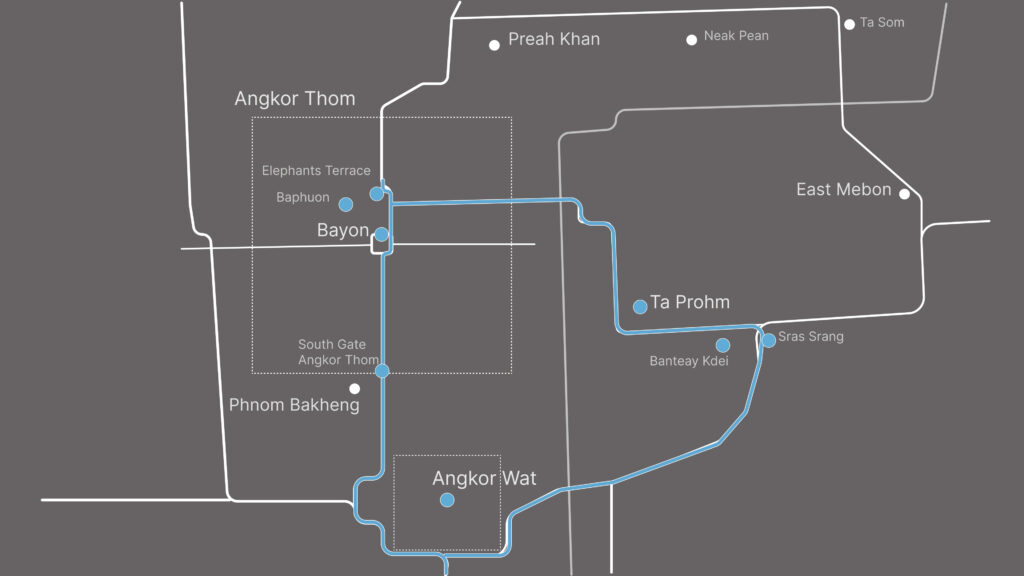
You can watch the actual Small Circuit route here.
▶ Watch the video: Starting the Small Circuit (01:16)

The Small Circuit usually includes the most famous temples around Angkor:

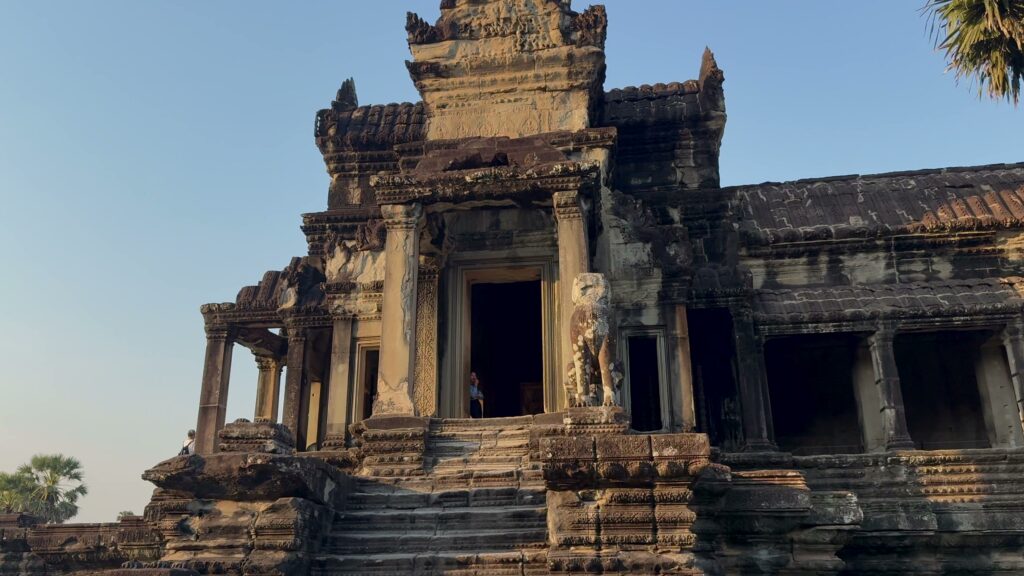
  • Angkor Wat
  • Bayon and central Angkor Thom
  • Ta Prohm
  • Banteay Kdei

The driving distance between temples is relatively short, making the route feel efficient. However, the actual walking distance inside the temples can still be surprisingly long.

I personally followed the route clockwise and visited Angkor Wat at the end of the day.

Small Circuit Route

  • South Gate of Angkor Thom
  • Bayon and central Angkor Thom complex
    • Bayon Temple
    • Baphuon
    • Phimeanakas
    • Terrace of the Elephants
    • Terrace of the Leper King
  • Ta Prohm — famous as a Tomb Raider filming location
  • Banteay Kdei — one of the quieter places within the Small Circuit
    • Srah Srang is walkable from here
  • Angkor Wat — personally, I found late afternoon more comfortable than the crowded morning hours

The Small Circuit gives a very satisfying “classic Angkor” experience, but because it includes the most famous temples, crowds and heat become intense by late morning.

Big Circuit

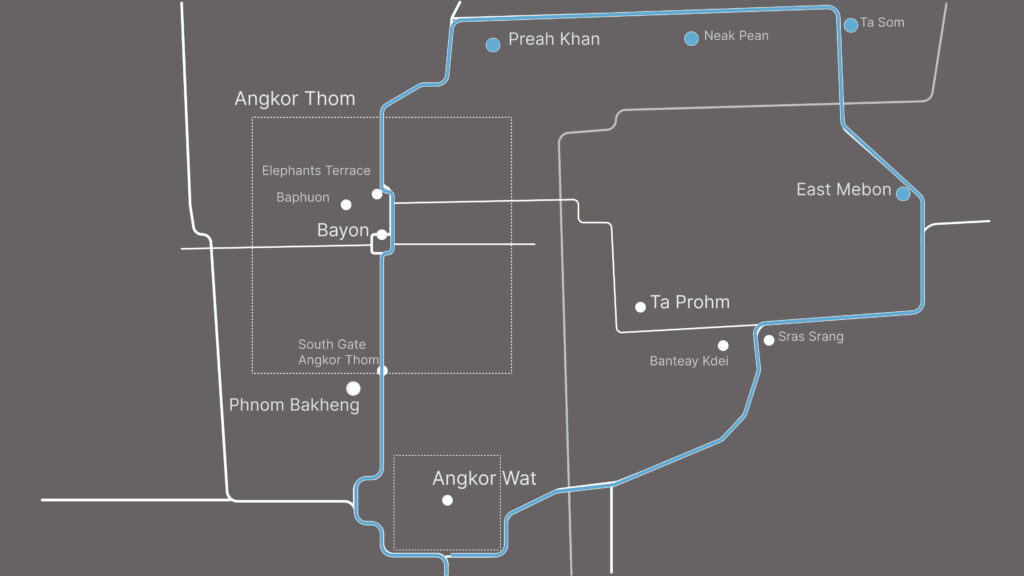
You can watch the actual Big Circuit route here.
▶ Watch the video: Starting the Big Circuit (07:35)

The Big Circuit covers a wider area and usually includes temples such as:

  • Preah Khan
  • Neak Pean
  • Ta Som
  • Pre Rup

The travel distances are longer, and the route feels much more open and spread out compared to the Small Circuit.

I also followed this route clockwise.

Big Circuit Route

  • Preah Khan
    • long interconnected corridors stretching in multiple directions
  • Neak Pean
    • a small island temple surrounded by water
  • Ta Som
    • smaller and quieter, with beautiful remaining carvings
  • East Mebon
    • protected by large elephant statues
    • I originally considered continuing to Pre Rup, but stopped here because the afternoon heat had become overwhelming

Areas around Preah Khan and Ta Som felt especially peaceful. Compared to the central Angkor area, there were far fewer tourists, and the atmosphere felt closer to nature slowly reclaiming the ruins.

Because most transfers were done by tuk-tuk, the ride itself became a chance to rest between temple walks.

The Biggest Difference in Practice

After actually visiting both routes, I realized the biggest difference was not the number of temples — it was the number of decisions.

You can also read my full 4-night Siem Reap itinerary here.

The Small Circuit naturally flows from one major site to another. Because the route structure is simpler, it requires fewer decisions throughout the day, which makes it easier for first-time visitors.

The Big Circuit is different. The longer distances gradually increase the number of choices: which temple to skip, whether to continue farther, or when to return before the heat becomes too intense.

In Siem Reap, heat affects decision-making faster than expected. By afternoon, mental fatigue often arrived before physical exhaustion.

Because of that, the Big Circuit became much more enjoyable once I accepted that I did not need to see everything.

▶ Watch the video: Adjusting the route during the day (05:20)

Angkor trips become far easier once you decide in advance what you are willing to skip.

Which Route Is Better for First-Time Visitors?

If this is your first Angkor Wat trip, I personally recommend starting with the Small Circuit.

  • You can efficiently visit the most iconic temples
  • The transfer distances are relatively short
  • The route requires fewer decisions during the day
  • It gives a strong overall understanding of the Angkor area

The Big Circuit, on the other hand, works especially well for travelers who want quieter temples, slower pacing, and a stronger sense of how vast the Angkor region really is.

However, I also felt that the Big Circuit required more preparation. Heat management, pacing, and deciding which temples to skip became increasingly important throughout the afternoon.

Instead of trying to maximize the number of temples, the experience became much more enjoyable once I allowed flexibility in the schedule.

Summary

The real difference between the Small Circuit and Big Circuit was not simply the travel distance. It was how many decisions each route demanded throughout the day.

The Small Circuit naturally felt easier for a first visit, while the Big Circuit became far more comfortable once I accepted that I did not need to see everything.

In practice, Angkor trips became more satisfying when I focused less on “completing” the route and more on keeping enough flexibility to adjust to heat, fatigue, and changing energy levels.

Using TravelPassport to Organize Route Options

One thing that helped significantly during this trip was organizing possible temple routes inside TravelPassport before arriving at the sites.

  • Priority ranking for temples I most wanted to visit
  • Optional temples to skip depending on the heat
  • Personal “return timing” rules for avoiding exhaustion

In Siem Reap, repeatedly deciding “What should we do next?” becomes surprisingly tiring under the heat. Simply organizing the options in advance made the itinerary feel much more stable and relaxed.

It also helped when discussing the route with tuk-tuk drivers, since I could quickly show temple priorities and possible alternatives instead of explaining everything from scratch.


Download TravelPassport
Scan the QR code to get started.

-Travel Guides, Travel Style
-, , , , , , , , , , , , , ,