
Hoi An Old Town was one of the strongest parts of the trip. Lanterns, boats, yellow buildings, the river, and crowds create an intense atmosphere at night, while the daytime sun makes even simple walking tiring.
My main advice after visiting is to experience Hoi An in two parts: evening to night, then the quiet morning after.
Ticket prices and conditions in this article are examples from the May 2026 trip. Check current details before visiting.
The video shows the lanterns, riverfront, evening crowds, and quiet morning streets. This article adds practical context around tickets, cash, midday conditions, and timing.
Short Answer: Do Not Try to Do It All at Midday
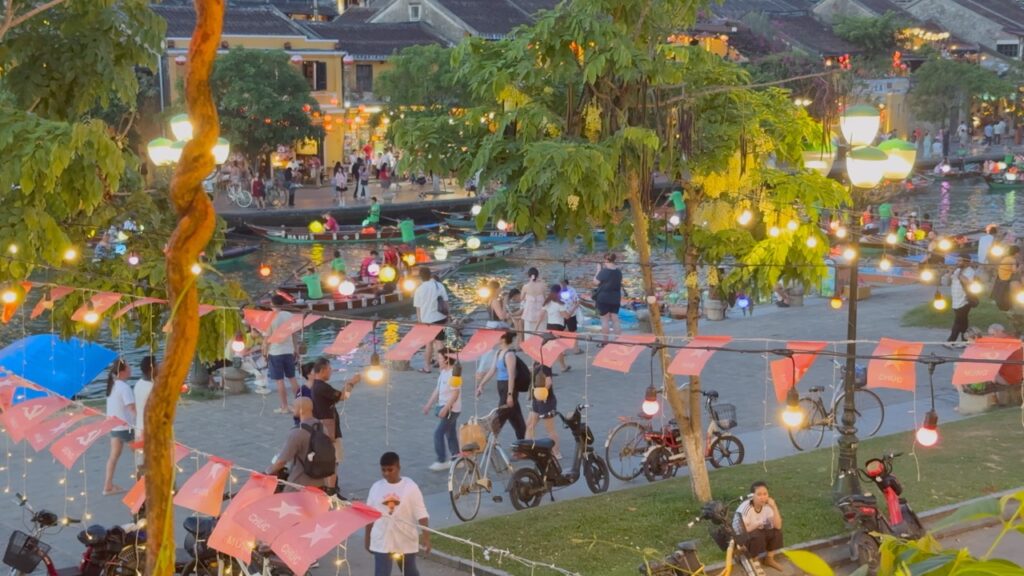
Watch the video: Hoi An from an upstairs riverside restaurant (01:22)
Rest at the hotel pool or a cafe during the hottest hours, then go out when the town becomes more atmospheric in the evening. Lanterns, boats, the river, and the movement of people bring out Hoi An's strongest tourist appeal.
Return the next morning for quieter streets, yellow walls, flowers, alleys, and the river. Seeing both periods gives a more balanced impression of Hoi An.
Tickets and Cash

You do not need a ticket simply to walk through Hoi An Old Town. If you want to enter old houses, museums, assembly halls, or sites such as the Japanese Covered Bridge, buying the Old Town ticket is useful.
Ticket booths were located around the Old Town and were easy to find. During this trip, the ticket cost 120,000 VND and the booth accepted cash only.
The ticket was valid for 24 hours and allowed entry to up to five participating sites. I did not use all five entries before the visit ended.
The ticket booth accepted cash only during the May 2026 trip. Bring Vietnamese dong and confirm the current rules before relying on this information.
Hoi An at Night: Beautiful and Highly Touristy
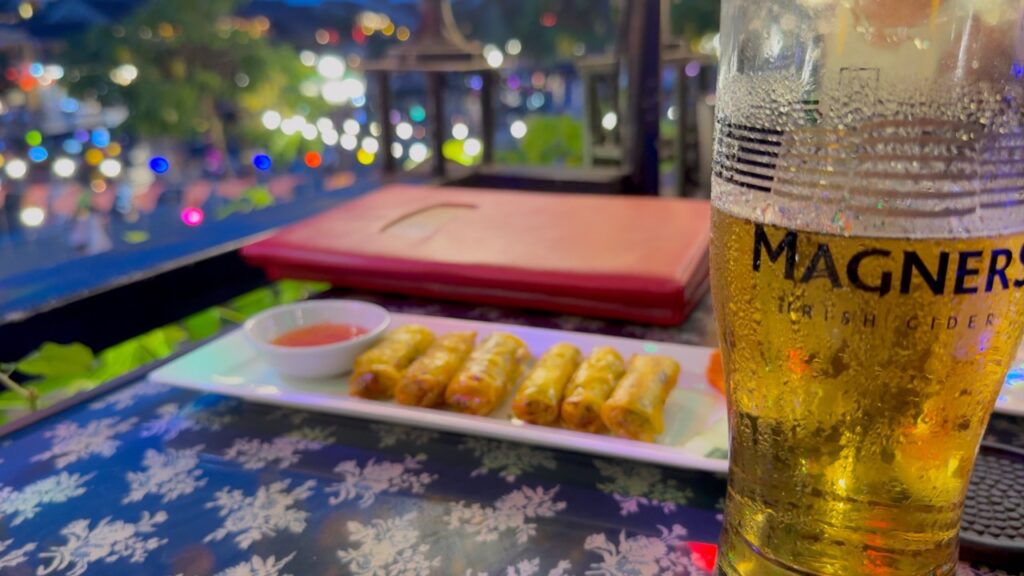
Watch the video: Watching the town with a beer (01:25)
Lanterns, boats, the river, yellow buildings, restaurants, shops, and crowds overlap everywhere. Sitting by the river with a beer and watching the lights and people was one of the better moments of the trip.
Do not expect an empty preserved town. At night, Hoi An is busy, commercial, and full of visitors. Its appeal comes from accepting both the atmosphere and the tourist energy.
Hoi An in the Morning Was Excellent
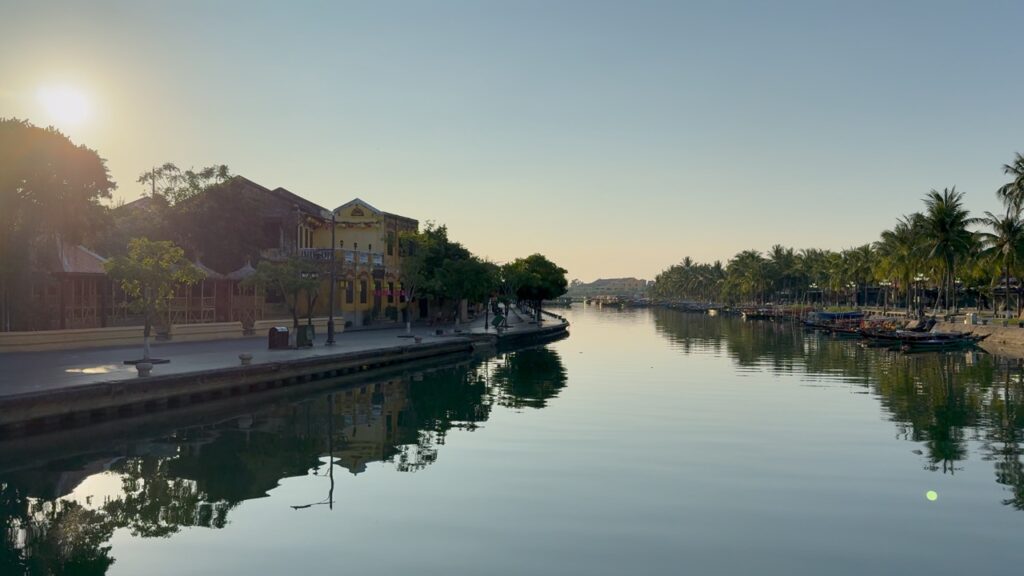
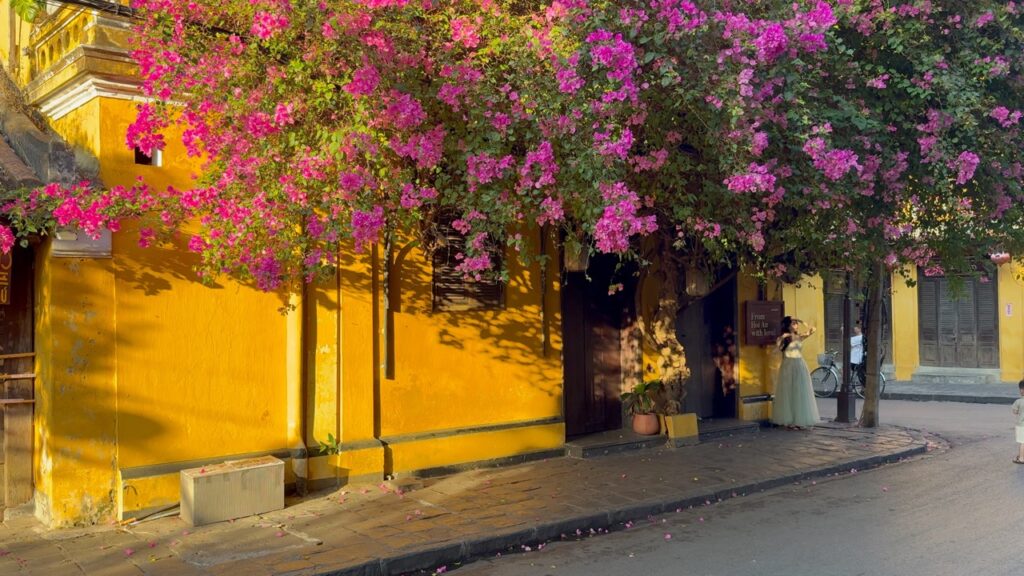
Watch the video: The quiet side of Hoi An in the morning (02:12)
The streets were quieter, many shops were still closed, and the yellow walls, flowers, alleys, and river were easier to notice.
If you only see Hoi An at night, you may remember it mainly as an intense tourist destination. Walking in the morning lets you see the shape of the town itself and is one of the strongest reasons to stay overnight.
How I Would Walk It
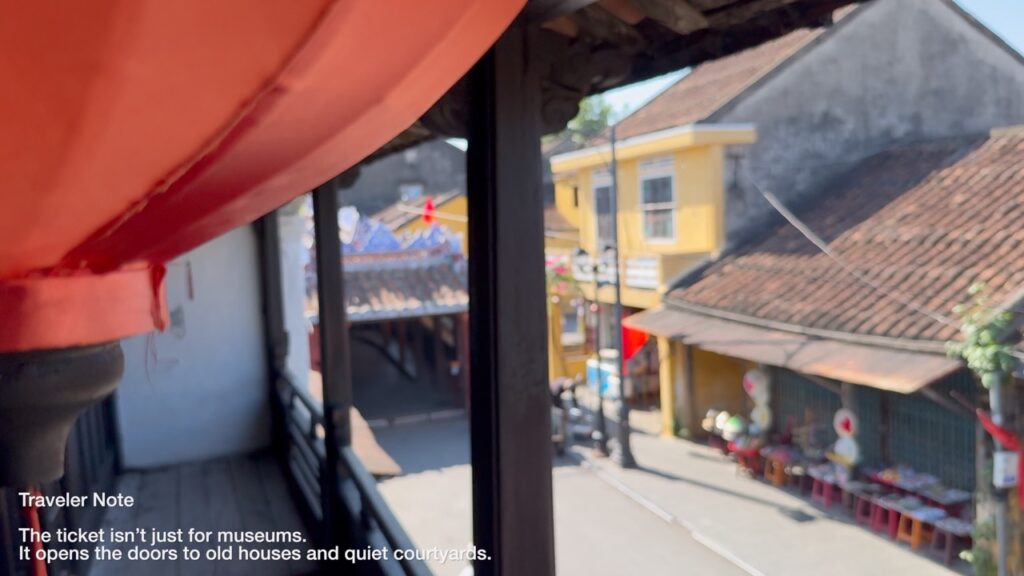
Watch the video: Japanese Covered Bridge from an old house (02:58)
Avoid forcing the visit into midday. Use the evening for the river, lanterns, and busy Old Town atmosphere. Use the next morning for quieter streets, yellow buildings, alleys, and architectural details.
Visit ticketed sites selectively based on the weather and crowds instead of trying to maximize every entry. Hoi An was more memorable when the time of day changed the experience.
How TravelPassport Fits
Hoi An involves tickets, cash, walking routes, hotel location, and timing. Keeping ticket details, route notes, cash reminders, and the hotel location together reduces the checking needed in the evening crowds or during an early walk.

TravelPassportをダウンロード
旅のデータはあなたの手元に。安心して旅を楽しめます。

(App Store)

(Google Play)
Final Verdict
Hoi An is famous for its lanterns, but the lanterns were only half of the experience.
The lively evening and the peaceful morning felt like visiting two different towns.
That contrast is what made Hoi An unforgettable.
Related YouTube Videos
These videos show two broader Da Nang and Hoi An travel patterns, including an overnight stay and a shorter visit.
