
What stayed with me from Da Nang was not only the major attractions. Four days gave me enough time to notice the quiet beach mornings, ordinary city life, and time spent simply enjoying the hotel.
It was the people walking along the beach in the morning, the ordinary city streets just beyond the coast, the time spent resting at the hotel, the Han River in the evening, and the crowd gathering before the Dragon Bridge show.
Looking back on those four days, these moments connected into a rhythm that felt more memorable than a checklist. Da Nang was most comfortable when I went out in the morning and evening, slowed down in the middle of the day, and treated the short distance between the sea and the city as part of the experience.
The video captures the atmosphere. This article explains why that pace worked.
Think About Four Days as a Rhythm, Not a Checklist

▶ Watch this scene: My Khe Beach before sunrise (00:53)
The pattern that suited Da Nang was simple: move in the morning, rest around midday, then return to the city in the late afternoon.
Mornings were for the beach and walking. A cooler part of the day could include Marble Mountains or Son Tra Peninsula. By midday, the heat made it natural to return to the hotel or stop at a cafe. Evenings belonged to the riverfront, city streets, and Dragon Bridge.
The same beach could feel different each morning. One visit was about sunrise, another about the sand, swimmers, or the quiet view from the hotel.
The Beach Became the Center of the Trip
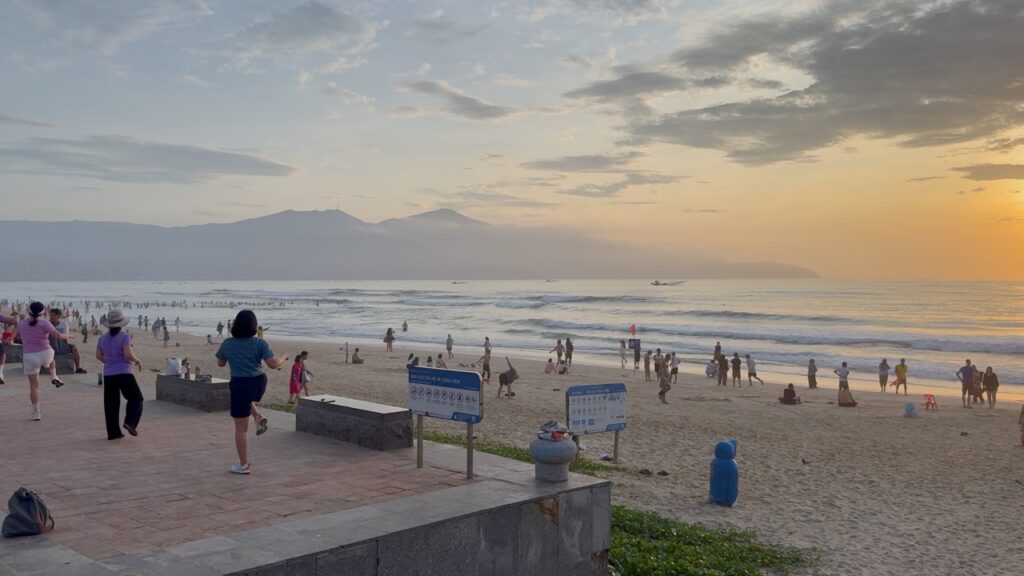
▶ Watch this scene: Early morning at My Khe Beach (01:20)
My Khe Beach in the morning felt less like a tourist attraction and more like part of daily life.
Around sunrise, people were walking, jogging, exercising, dancing, and swimming. The city seemed to wake up from the coastline.
Nothing elaborate was required. A walk by the sea, time in the breeze, and breakfast back at the hotel were already part of the trip. Waking early did not feel like preparation for sightseeing. It was the experience itself.
The Sea and the City Are Close Together

▶ Watch this scene: Motorbikes moving through the city (06:45)
Da Nang can shift quickly from beachfront hotels to cafes, local restaurants, markets, and the streets around the Han River.
The coast creates a resort atmosphere. A short trip inland reveals motorbikes, shops preparing for the day, everyday meals, and the riverfront in the evening. I did not need to divide the beach and the city into separate trips; both could fit naturally into the same day.
Walking from the hotel to a cafe or pausing beside the river mattered as much as moving between named attractions.
Marble Mountains and Son Tra Show Two Forms of Nature
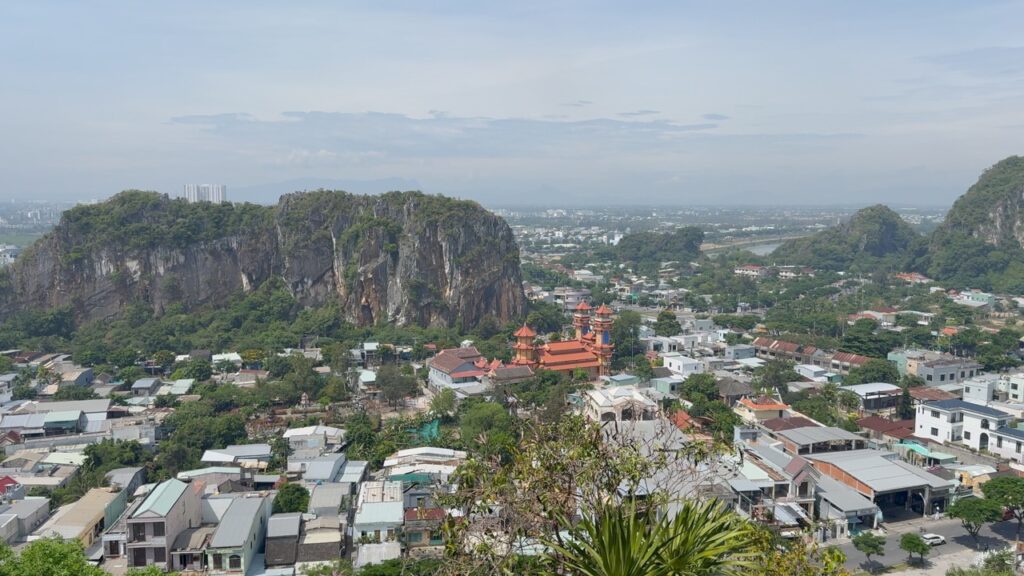
▶ Watch this scene: View from Marble Mountains (02:50)
Marble Mountains were more physical than they first appeared. Caves, stairs, rock paths, and temple spaces made the visit feel like a small adventure rather than a light sightseeing stop.
Son Tra Peninsula offered a different perspective. From Linh Ung Pagoda and the viewpoints, the sea, city, fishing boats, and roads appeared together. It helped me understand the shape of the coastline I had been seeing from the beach.
Both places add nature to the trip, but there is no need to rush through them. Marble Mountains reward the walking; Son Tra rewards the time spent looking.
Do Not Fight Midday: Hotel Time Is Travel Time
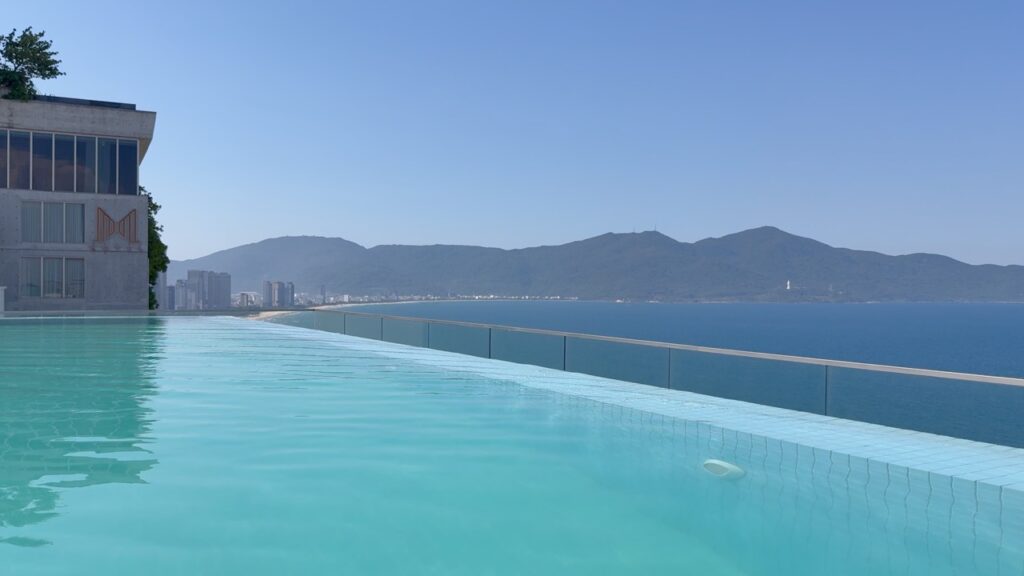
▶ Watch this scene: Taking it slow at the hotel pool (05:17)
The strong midday sun can drain the energy needed for the evening.
Returning to the hotel pool, looking at the sea from the room, or sitting in an air-conditioned cafe should not feel like wasted travel time.
A beach hotel changes the morning. A riverfront hotel changes the night. Resting in either place still reveals something about Da Nang.
Walk the City in the Late Afternoon
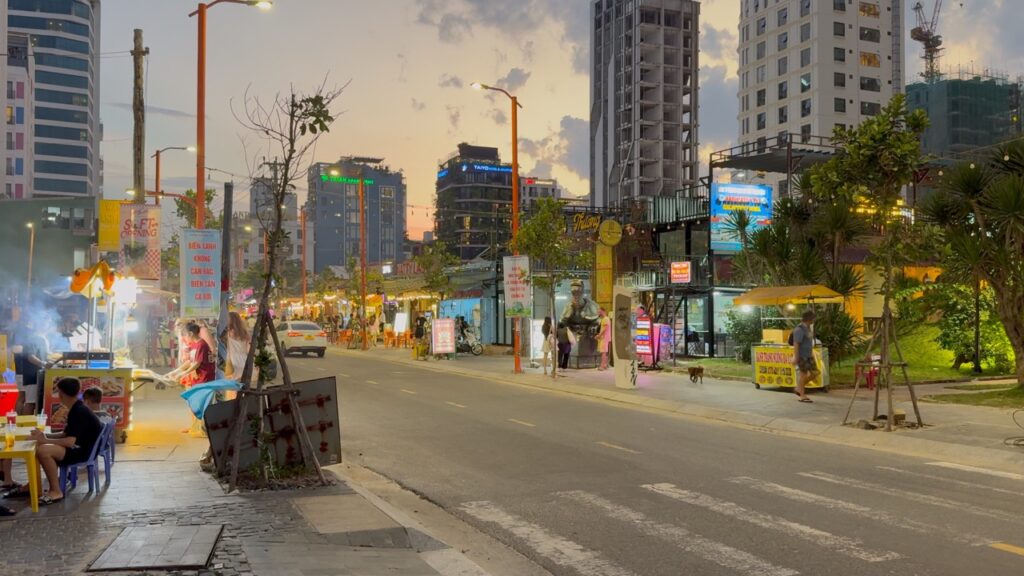
▶ Watch this scene: Da Nang in the evening (06:58)
When the sunlight became less intense, it was easier to go outside again.
Walking beside the Han River, looking at the bridges, and heading toward a cafe or dinner showed Da Nang as a city rather than only a beach destination.
A city walk does not need a major objective. Watching the buildings, shops, traffic, and people made the distance and scale of the city easier to understand.
Dragon Bridge Begins Before the Show
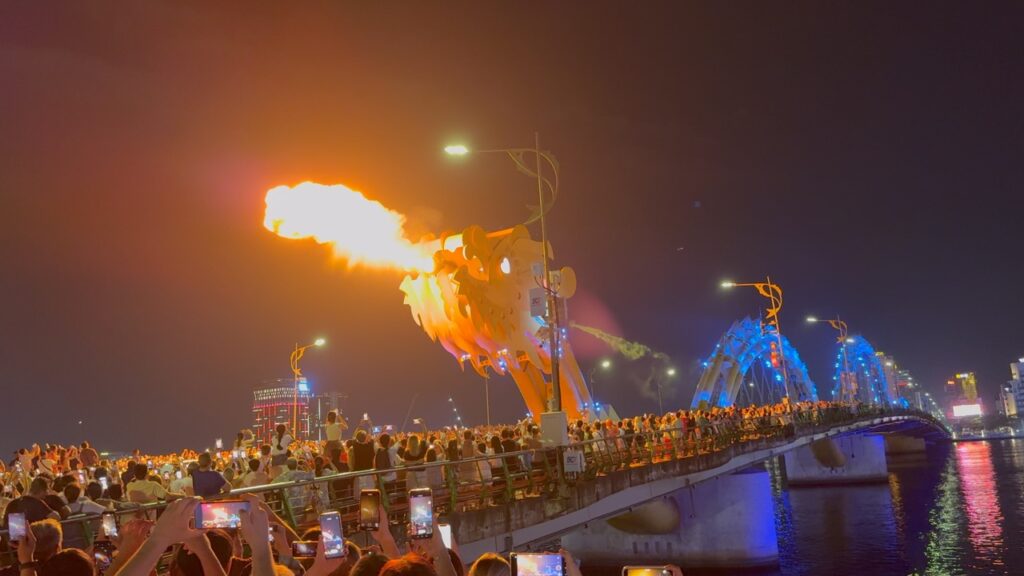
▶ Watch this scene: Crowds at the Dragon Bridge show (03:35)
The fire and water are only one part of the Dragon Bridge experience.
As showtime approached, people gathered, chairs and stalls appeared, and an ordinary riverside area gradually became an event space. It felt less like attending a formal performance and more like joining a weekend evening in Da Nang.
Arriving early enough to watch that change gave the short show more context.
Four Days Without Trying to See
Everything
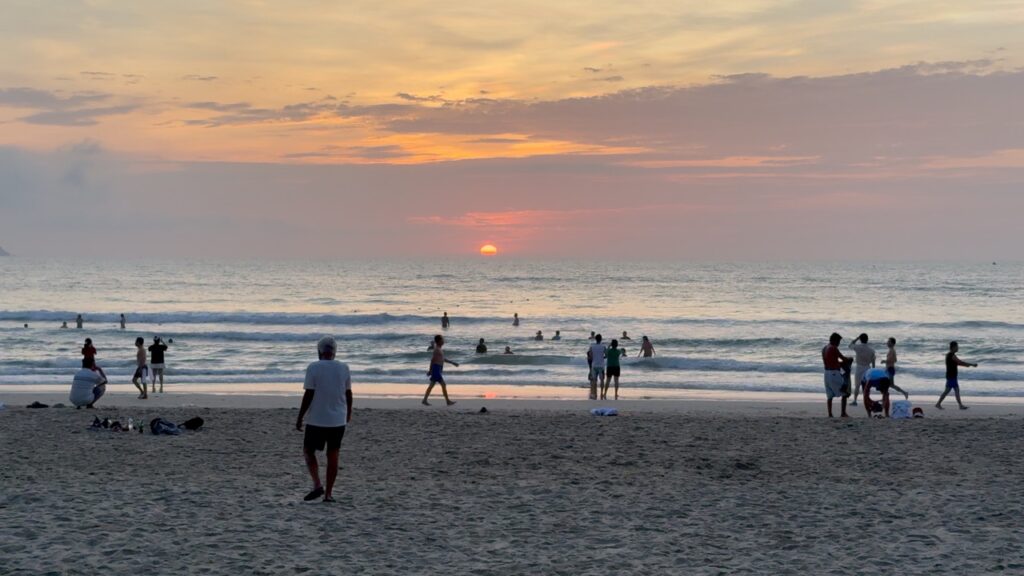
▶ Watch this scene: A beach morning worth repeating (04:00)
Four days can create pressure to keep adding places. What improved this trip, however, was the space left open.
I did not need every viewpoint. I did not need to stay outside through the hottest hours. I could return to the hotel or revisit the beach on another morning.
Repeating a place is not wasted time. Different light, weather, and local activity can make the same stretch of coast feel new.
Not Every Place Needs to Be on This Trip
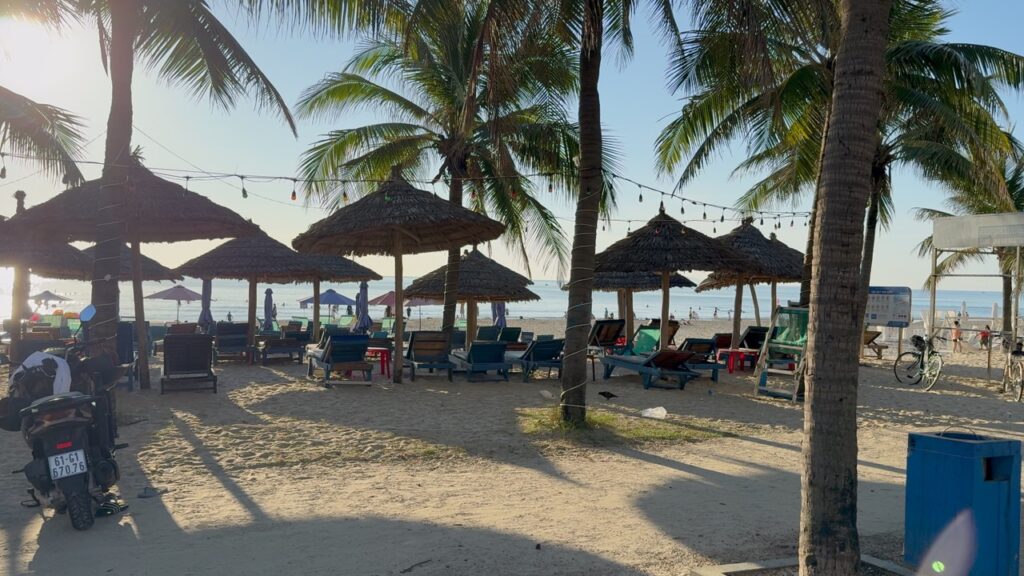
Watch the video: Enjoying the open space in the trip (07:14)
Hoi An and My Son Sanctuary are both meaningful places to visit from Da Nang. That does not mean they both need to fit into a four-day trip.
Instead of using that time for a trip outside the city, you might walk the beach again, rest at the hotel, visit a neighborhood cafe, or spend a slower evening beside the Han River. That can be the right decision when the purpose of the trip is to experience Da Nang at an unhurried pace.
Skipping a place is not simply missing an attraction. It can be a deliberate choice about what deserves time on this particular trip.
Final Thoughts
What made four days in Da Nang comfortable was the close connection between the sea, city, natural areas, and hotel.
Walk the beach in the morning. Visit Marble Mountains or Son Tra when you want a change in landscape. Rest at midday. Return to the city or riverfront in the evening.
Da Nang stayed with me not because of how many places I completed, but because of how those hours felt.
Leaving Space with TravelPassport
Leaving space in a trip is not the same as making no plan.
It helps to know which morning stop matters, which attraction can be skipped if the day becomes too hot, when to return to the hotel, and which area to walk in the evening. That includes deciding whether Hoi An or My Son belongs in this particular trip.
Keeping hotels, transport notes, priority stops, and optional ideas together in a tool like TravelPassport can help protect the empty space instead of filling it.
Below is a relaxed four-day itinerary based on this article and video. You can copy it into TravelPassport and adjust the dates and times for your trip.
Copy this plan

Download TravelPassport
Scan the QR code to get started.

(iOS)

(Android)
