
Beng Mealea felt completely different from the temples around Angkor Wat.
Instead of a polished world-famous heritage site, it felt more like discovering the remains of a lost temple swallowed by the forest. Walking through the ruins felt less like sightseeing and more like exploring.
At the same time, Beng Mealea is not somewhere you casually add between major Angkor stops. It sits far from central Siem Reap, and getting there becomes part of the experience itself.
In this article, I’ll share what Beng Mealea is actually like, how it differs from Angkor Wat, what the journey feels like, and whether the long trip is truly worth it.
You can also watch the cinematic trip video from this visit below.
What Is Beng Mealea?
Beng Mealea is a 12th-century Khmer temple believed to have been built during roughly the same period as Angkor Wat. Many historians point out similarities in layout and architectural style, which is why it is sometimes described as a “prototype” of Angkor Wat.
But the atmosphere today is completely different.
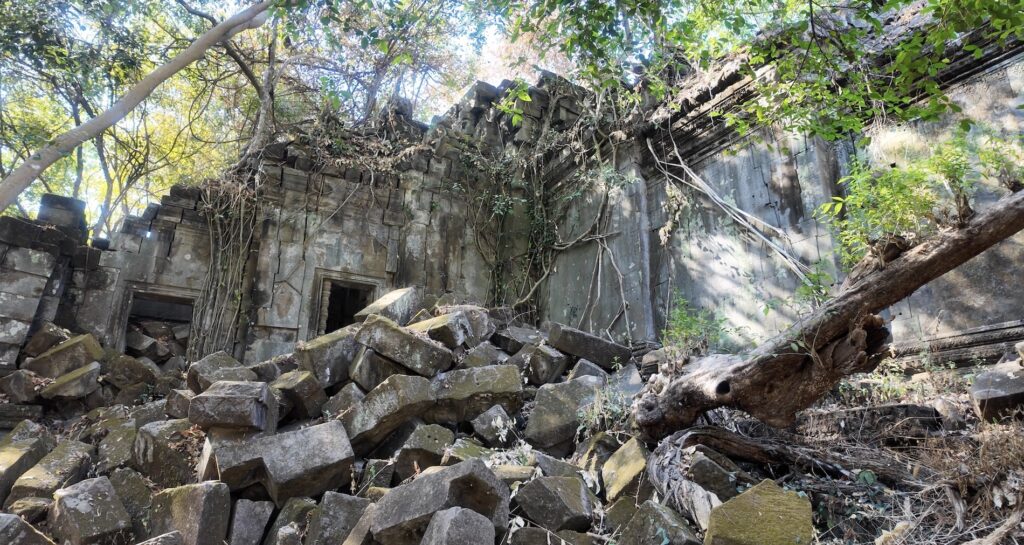
While Angkor Wat has been heavily restored and organized for large-scale tourism, Beng Mealea remains partially collapsed and intertwined with nature. Massive tree roots wrap around fallen stones, corridors are broken apart, and parts of the site still feel raw and untouched.
Instead of walking through a carefully restored monument, it feels like wandering through ruins slowly being reclaimed by the jungle.
That atmosphere reminded me of the hidden overgrown ruins often seen in fantasy adventure movies and games.
▶ Watch the video: Exploring the collapsed ruins of Beng Mealea (03:31)
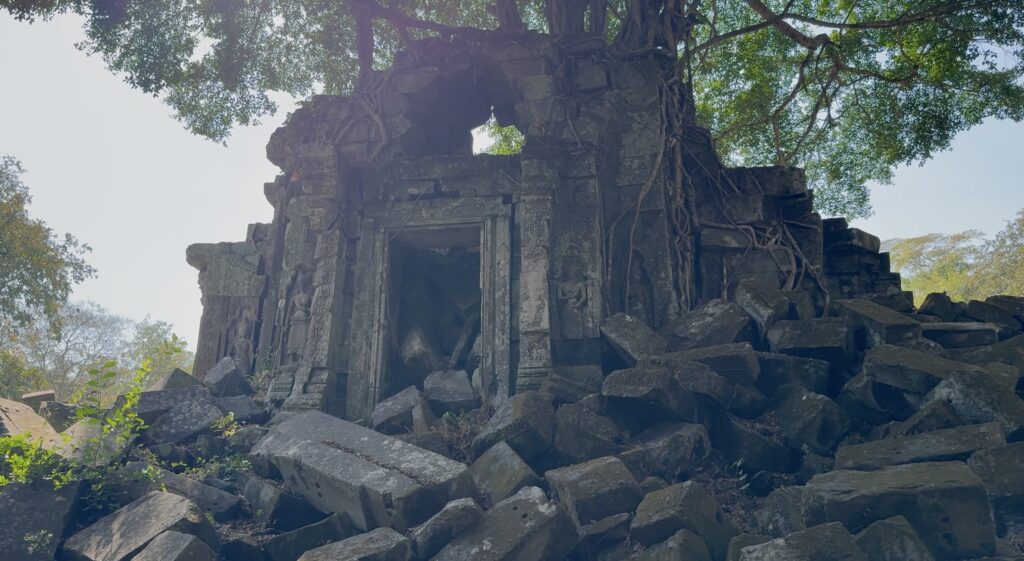
Unlike Angkor Wat, Beng Mealea still feels like a forgotten ruin hidden deep inside the forest.
Beng Mealea Feels Like an Adventure Site
Beng Mealea is very different from the main Angkor temples. Paths are not perfectly organized, and many parts of the structure remain collapsed. Instead of walking through clean temple corridors, you often move through narrow passages, wooden walkways, and broken stone sections.
That sense of uncertainty is part of what makes the site memorable. You are constantly looking for the next route deeper into the ruins.
One important thing to know is that Beng Mealea requires a separate ticket from the standard Angkor Pass.
You can purchase the ticket online in advance, which makes arrival smoother. If you haven’t bought it yet, your tuk-tuk driver will usually stop by the ticket office before entering the site.
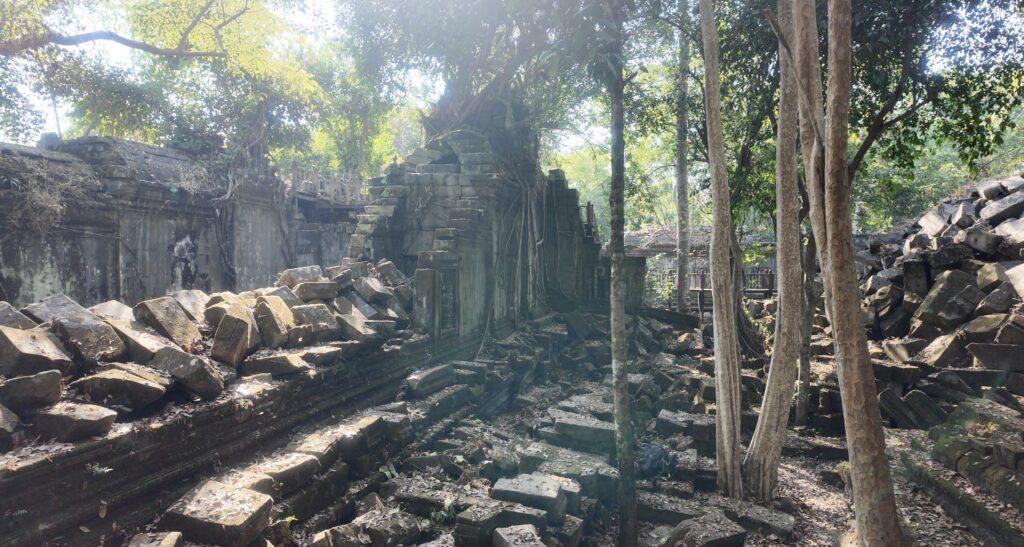
The Journey There Felt Like Part of the Trip
One of the most memorable parts wasn’t only the temple itself — it was the long journey toward it.
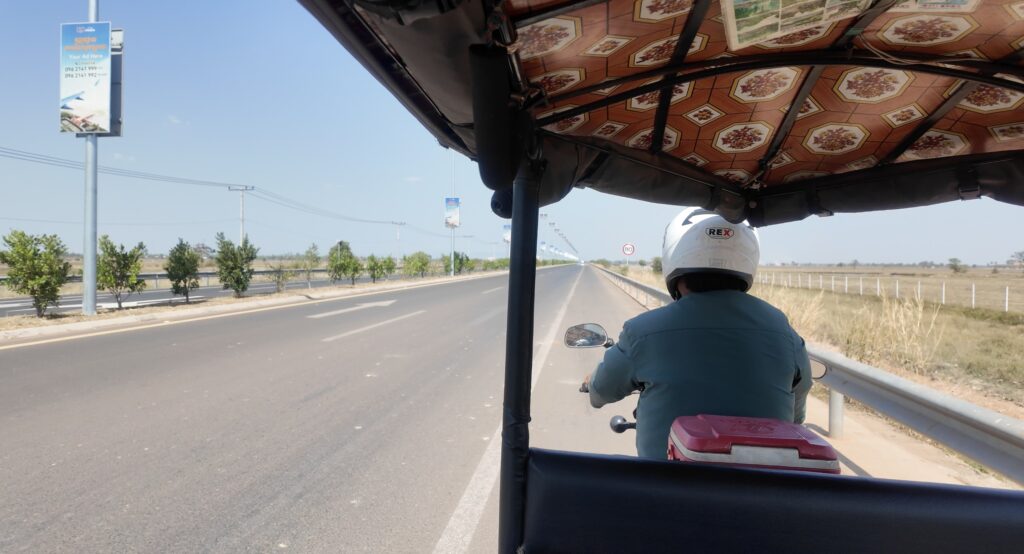
As we left central Siem Reap behind, the roads gradually became quieter and straighter. At some points, the highway stretched toward the horizon almost endlessly.
The city slowly disappeared, and the feeling shifted from “tourism” to “heading somewhere remote.”
Compared to the busy atmosphere around Angkor Wat, the road to Beng Mealea already felt like entering a completely different Cambodia.
The Tuk-Tuk Ride Was Harder Than Expected
I visited Beng Mealea by tuk-tuk, but the ride was much longer and tougher than I expected.
After leaving the main city area, the road continued through long gradual inclines. At one point, the driver stopped for around 20 minutes to let the engine cool down and avoid overheating.
At first I thought something had gone wrong, but apparently this is fairly normal for long tuk-tuk trips in Cambodia.
Interestingly, that unexpected break became one of my favorite memories from the day. We chatted casually while waiting beside the road, and the trip suddenly felt much more personal and real.
For Beng Mealea, even the time spent getting there became part of the overall experience.
▶ Watch the video: The road toward Beng Mealea (03:21)
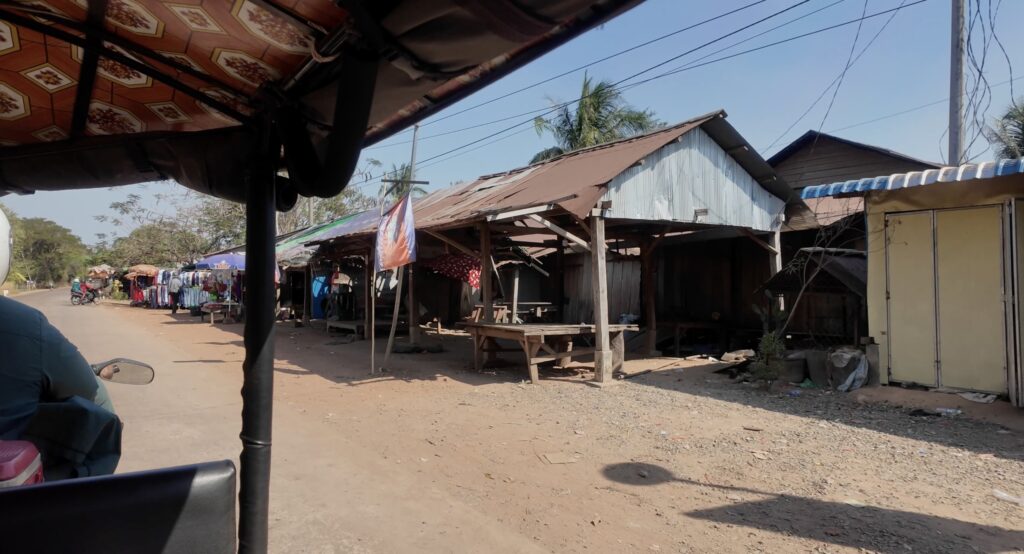
The farther we traveled from Siem Reap, the more it felt like heading into an actual expedition.
What It Actually Felt Like Walking There
Beng Mealea was not about polished grandeur in the way Angkor Wat is.
What stayed with me most was:
- The collapsed stone structures
- The silence of the surrounding forest
- The relatively small number of visitors
- The feeling that the ruins had not been overly restored
One of the strongest moments came when there were almost no other tourists nearby and the only sound inside the ruins was the wind moving through the trees.
The atmosphere felt completely different from the busy temple zones near Angkor Wat.
Who Should Visit Beng Mealea?
Recommended For
- Travelers who love ancient ruins
- Photography and cinematic travel enthusiasts
- People looking for quieter temple experiences
- Travelers who enjoy adventure-like destinations
- Visitors wanting more than the standard Angkor Wat route
Probably Not Ideal For
- Very short stays in Siem Reap
- Travelers focused only on efficiency
- People sensitive to heat or long transportation times
- Visitors prioritizing only famous highlights
Final Thoughts
Beng Mealea is not really a place to compare directly against Angkor Wat.
The long ride, the empty roads, the jungle atmosphere, and the silence inside the collapsed ruins all combine into one larger experience.
Yes, getting there takes time and effort. But that distance is part of why Beng Mealea feels so different from the main Angkor temples.
Personally, I think Beng Mealea works best later in a Siem Reap trip — after visiting the major Angkor temples — because the contrast becomes much more powerful.
You can also check my 3-Day Siem Reap Itinerary and 4-Day Siem Reap Itinerary including Beng Mealea.
Related Videos
Watching Beng Mealea after the main Angkor Wat temples makes the contrast between the two experiences much easier to feel.
Organizing Long-Distance Temple Trips with TravelPassport
One thing that helped a lot during this trip was keeping all long-distance travel information organized inside TravelPassport.
- Beng Mealea ticket information
- Tuk-tuk booking details
- Estimated return timing
- Driver contact information
- Optional places to skip depending on heat or fatigue
For remote temple trips, simply knowing how you’ll return — and having everything connected in one place — makes the experience feel much less stressful.

Download TravelPassport
Scan the QR code to get started.

(iOS)

(Android)
