
If you are planning a trip to Da Nang or Hoi An, My Son Sanctuary will probably appear on your list at some point. It is connected to the ancient Champa Kingdom, and it is close enough to visit as a day trip from Da Nang or Hoi An.
After visiting, my answer is more nuanced: My Son Sanctuary is worth visiting for some travelers, but it is not a must-see for everyone.
If you expect something as large and overwhelming as Angkor Wat, My Son may feel small. But if you treat it as a compact forest ruin where you can walk through red-brick temples, linga and yoni details, humid paths, and a quieter historical layer of Central Vietnam, it can be a meaningful half-day trip.
Any specific prices or hours in this article should be treated as May 2026 trip-time information unless stated otherwise. Current fees and hours may change.
Short Answer: Worth It for History and Atmosphere, Not Scale
- Worth it if you want history, atmosphere, and forested red-brick ruins
- Not essential if your trip is mainly beaches, cafes, and Hoi An
- Go in the morning and plan your return ride before arriving
- Do not expect Angkor Wat-level scale
Da Nang can easily become a trip about beaches, sunrise walks, hotels, cafes, and Grab rides. Hoi An adds lanterns, yellow walls, riverfront evenings, and old-town walking. My Son changes the texture of the trip again. Instead of the coast, you move inland. Instead of modern hotels and beach roads, you enter a forested valley with red-brick ruins and traces of Hindu worship.
Getting There from Da Nang by Grab
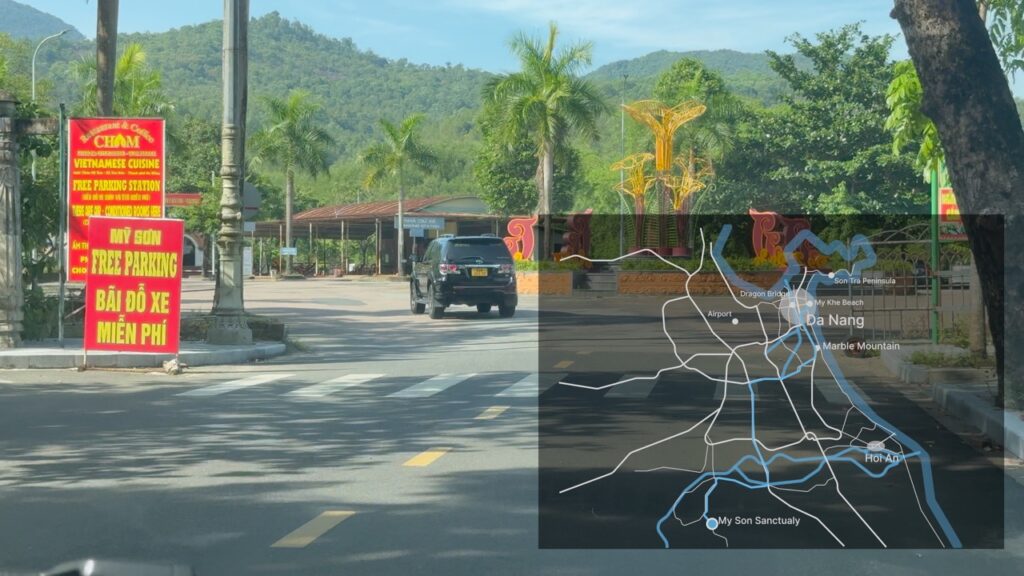
The visit started with a morning on the Da Nang coast, filming the sunrise near My An Beach. After the beach, waves, morning walkers, and swimmers, I headed inland to My Son.
The main question before going was transport. Marble Mountains felt simple enough by Grab because it is relatively close to the city and beach area. My Son is different. It is farther out, so the question is not only whether you can get there, but how you will get back.
In the end, I used Grab in a round-trip, charter-like way. I communicated with the driver using smartphone translation, arranged the pickup, and handled the return conversation through the phone.
The driver said his family home was near My Son, and he shared small details about the surrounding area during the ride. That made the transfer more interesting than a normal point-to-point ride.
For My Son, I would think about the return ride before you arrive. When you are hot and tired after walking through the ruins, having a clear return plan matters more than it seems.
▶ Watch the video: Heading to My Son Sanctuary (00:16)
What My Son Actually Felt Like
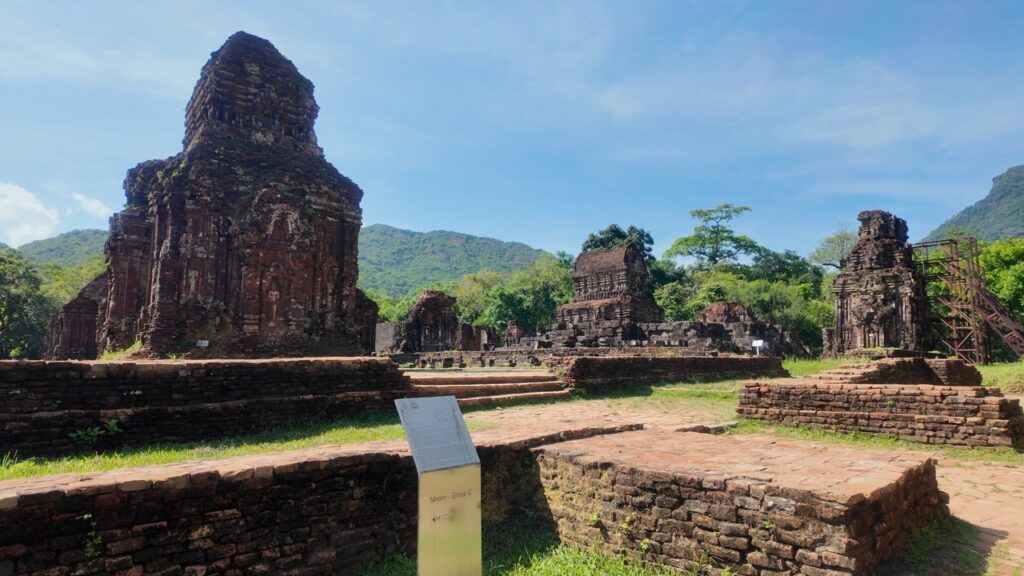
At the site, I walked through multiple areas, including A, B, C, D, and G. The strongest memory is not one specific ruin. It is the combination of heat, red brick, filtered light, humidity, trees, and walking through a valley where old structures remain partly absorbed by nature.
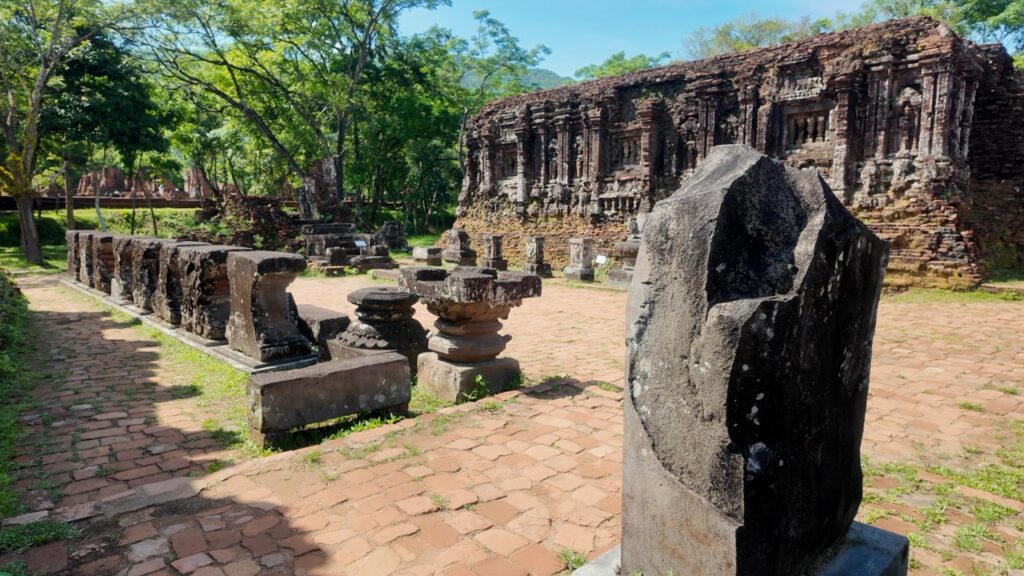
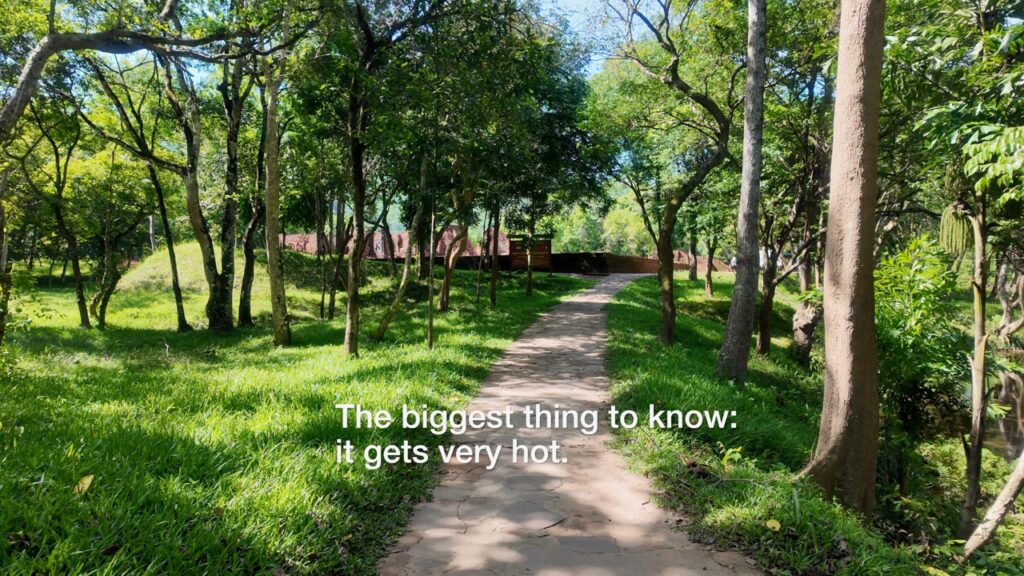
The site is forested, but it did not feel like a cool forest walk. It felt hot and humid. The red brick, broken walls, shaded paths, and open areas all made the visit feel physical. You do not just look at My Son; you move through it.
There was an electric cart, which helped. But the visit still involved walking. Once you enter the ruin area, you are moving between structures, deciding what to look at, whether to listen to the audio guide, where to take photos, and when to stop.
The ruins themselves gave a clear sense of Hindu influence. The linga and yoni details, red-brick towers, and interior spaces made it feel different from the beach-and-old-town parts of the trip.
▶ Watch the video: My Son Sanctuary Group C (00:29)
Historical Context from the Official Site
The apparent official site, disanvanhoamyson.vn, describes My Son as a valley site with more than 70 Champa architectural structures and historical, cultural, architectural, and artistic value spanning the 4th to 13th centuries.
Walking through the site, that context felt less like looking at one large monument and more like moving through the remains of a sacred landscape.
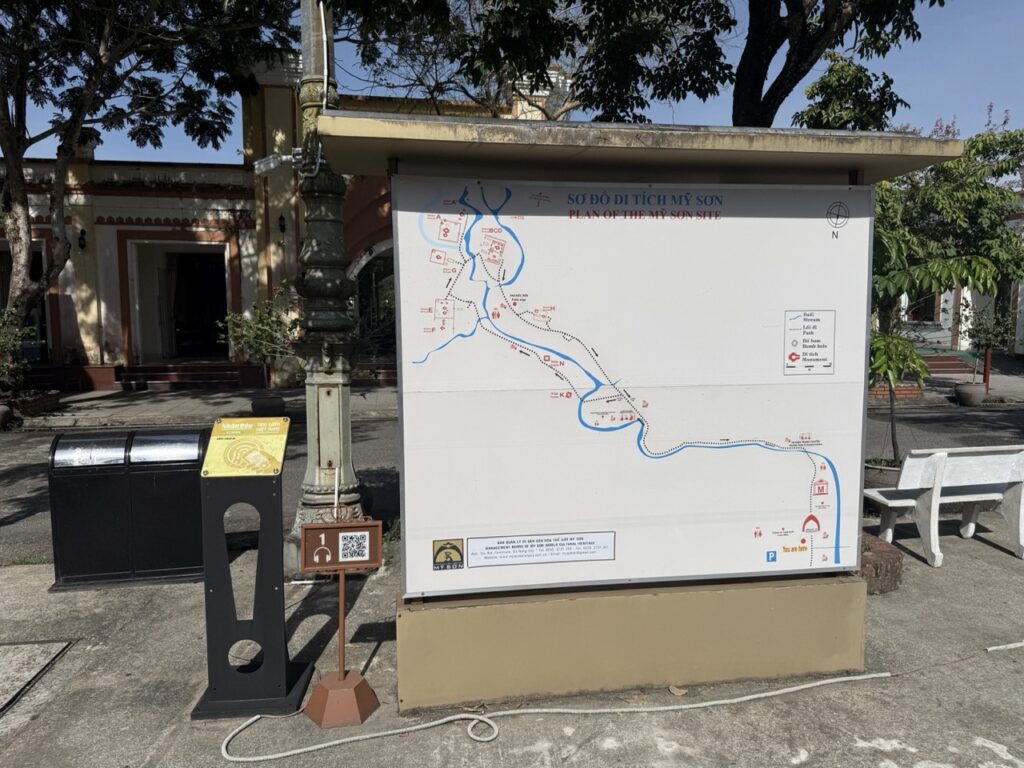
In the map photo, the lower-right area is the starting point near the entrance. The main ruins are grouped toward the upper-left, so visitors use the free electric cart for part of the route. The audio guide also works by entering the numbers or scanning the QR codes shown on the map and near the ruins.
My Son vs Angkor Wat
If you have been to Angkor, My Son will feel much smaller. Angkor Wat overwhelms you with scale, royal ambition, long corridors, reliefs, and the density of a major temple complex.
My Son is different. It feels more like walking through a sacred ruin in a forested valley. It is compact. It is closer to the body. You notice the heat, the brick, the trees, the damaged structures, and the way nature surrounds the site.
If you judge My Son only by size, it may feel underwhelming. But as part of a Central Vietnam itinerary, it gives the trip a historical and religious layer that Da Nang beaches and Hoi An lanterns do not provide on their own.
▶ Watch the video: My Son Sanctuary Group E (00:40)
Plan Around Heat and Return Transport
The most practical thing to know about My Son is simple: it can be very hot. Going in the morning was the right decision. As it gets closer to midday, the heat makes everything harder: walking, filming, listening to explanations, deciding where to go next, and waiting for a ride.
- Bring water
- Use a hat or sun protection
- Wear comfortable walking shoes
- Keep the afternoon light
- Decide how you will return before you are tired
On the way there, you still have energy. After walking through the ruins in the heat, you may not want to negotiate transport or wait uncertainly. Having the return ride arranged gave me more peace of mind than I expected.
▶ Watch the video: Ruins standing in the forest (00:55)
Is the Audio Guide Worth Using?
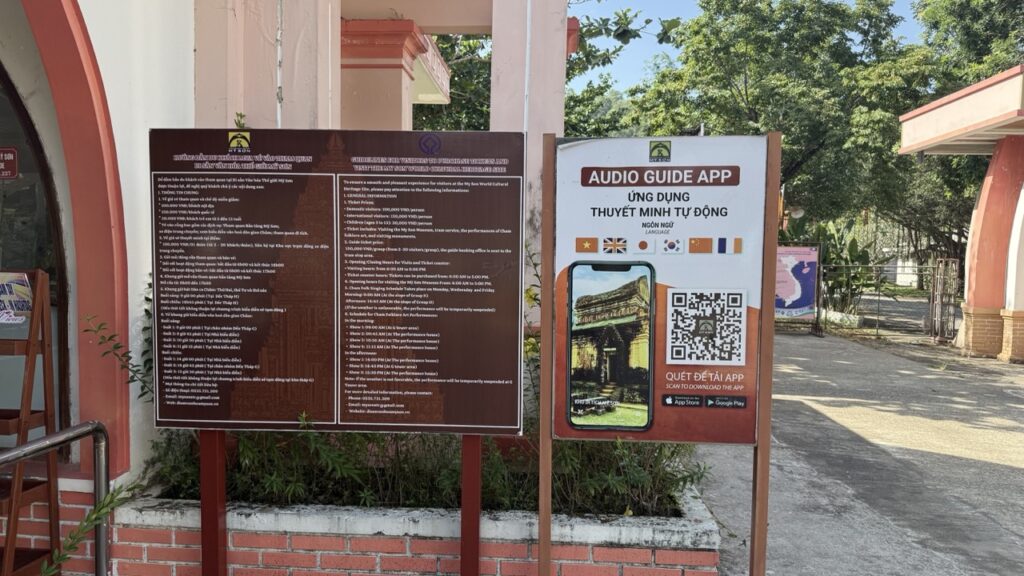
I also tried the audio guide app at My Son. It was useful for understanding some architectural and religious context. Stories about the valley setting, the symbolism of the mountain, and differences in tower styles were interesting.
But I did not feel the need to listen to everything. My advice is: use the audio guide if you are interested, but do not feel pressure to complete every stop. Listening selectively is more realistic, especially in the heat.
The audio guide worked best as a selective tool. In the heat, listening to every stop would have added more effort than value.
The guide starts by scanning the numbers or QR codes shown near the ruins. Earphones are useful if you plan to use it.
After installing the app, you also need to download several dozen MB of audio data, so it is more convenient to install the app and download the data before arriving. The purchased guide seemed to be valid only for the day of use, so be careful not to purchase too early.
Trip-Time Costs and Hours
- Admission: 150,000 VND
- Round-trip Grab ride: 967,200 VND
- Audio guide app: 70,000 VND shown in the app; 300 JPY through the Japanese App Store
- Hours: 6:00-17:00
- Audio guide: scan the numbers or QR codes near the ruins
- Preparation: install the app, download several dozen MB of audio data, and bring earphones
These are May 2026 trip-time details. Check the official site or current local listings before relying on them as current information.
How TravelPassport Fits
A side trip like My Son involves return transport, mobile signal, audio guide setup, and what to bring. When those details are scattered across chat messages, map apps, Grab, screenshots, and notes, you spend more energy checking things while moving. A tool like TravelPassport can help by keeping transport notes, reminders, and trip memos in one place.

Download TravelPassport
Scan the QR code to get started.

(iOS)

(Android)
Final Verdict
My Son Sanctuary is not a place I would call essential for every Da Nang or Hoi An traveler. It is best understood as a half-day side trip for people who want history, atmosphere, and a forested ruin experience.
If you expect the scale of Angkor Wat, it may feel small. But if you go with the right expectations, the red brick, linga and yoni details, filtered light, humidity, and walking through the valley create a different kind of memory from Da Nang's beaches or Hoi An's lanterns.
Go in the morning, prepare for heat, think about your return ride before arriving, and treat My Son as a historical layer rather than a headline attraction. With that mindset, it can make a Da Nang and Hoi An trip feel broader and more textured.
If I visited Da Nang again, My Son is a place I would be happy to return to. That said, if I only had three days, I would probably prioritize Marble Mountains first.
Related YouTube Video
For a broader look at the Da Nang and Hoi An trip that includes My Son Sanctuary, watch this video.
